Basement Waterproofing NJ Solutions for Spring Thaw Water Intrusion
Spring thaw has a way of exposing every weakness a basement has been hiding all winter. A home can make it through January and February looking perfectly dry, then March arrives with melting snow, cold rain, and saturated soil, and suddenly there is a damp wall, a musty odor, or a thin ribbon of water tracing across the floor. In New Jersey, that pattern is common enough that many homeowners assume it is just part of the season. It is not. Water intrusion during thaw season is a warning, and usually a very specific one.
The challenge in New Jersey is that spring rarely behaves in a neat, predictable way. One week the ground is still partially frozen. The next week temperatures jump, snow melts fast, and a heavy rainstorm lands on top of already saturated soil. In older neighborhoods with aging foundations, mixed grading, and decades of patchwork drainage changes, that combination creates pressure against basement walls and floors that many homes were never designed to handle. The right response is not to chase the puddle with towels and a dehumidifier. The right response is to understand why the water showed up in the first place and to match the repair to the cause.
Basement Waterproofing NJ projects often fail when they are treated like generic waterproofing jobs. A home in Monmouth County with a high water table needs a different approach than a century-old stone foundation in Essex County or a split-level in Bergen County where runoff from neighboring properties keeps flowing toward the house. Good waterproofing is less about one miracle product and more about diagnosing the route water takes, the pressure it creates, and the vulnerabilities already present in the structure.
Why spring thaw is so tough on New Jersey basements
Winter leaves behind conditions that set the stage for leaks. Soil around the foundation compacts and shifts during freeze-thaw cycles. Small cracks widen. Downspouts clog with debris from late fall and early winter storms. Window wells fill with leaves. Then the thaw arrives and sends a large volume of water into ground that may still drain slowly because the deeper layers remain cold and dense.
Hydrostatic pressure is usually the main actor. When the soil around a foundation becomes saturated, water pushes against basement walls and under the slab. It looks for the path of least resistance. That path may be a hairline crack, the cove joint where wall meets floor, a pipe penetration, a porous block wall, or even the seam around an old basement window frame. A homeowner often notices the symptom in one corner, but the actual source may be several feet away or tied to something happening outside.
I have seen this in homes where the owner swore the leak came from “the bad wall” because that is where the floor got wet. Outside, the real issue turned out to be a downspout dumping too close to the foundation on the opposite side of the house. Water traveled along the footing and surfaced where the slab and wall joint was weakest. That kind of misread is common, and it leads to repairs that look busy but solve nothing.
The signs that point to thaw-related intrusion
Not every wet basement event looks dramatic. Sometimes the warning is subtle and easy to dismiss until it becomes costly. A faint mineral deposit on painted masonry, peeling wall paint near the floor, rusting metal shelving, a dehumidifier that suddenly runs nonstop, or carpet tack strips turning black can all signal seasonal intrusion. Musty odor is another frequent clue, especially in finished basements where water may be getting behind framing or under flooring long before it becomes visible.
Spring thaw leaks also tend to have a pattern. They show up during rapid warmups, after back-to-back rainy days, or after snowmelt followed by a hard rain. If the basement stays dry in summer thunderstorms but leaks in late winter or early spring, that timing matters. It suggests the problem is tied less to roof runoff alone and more to saturated soil conditions, poor footing drainage, or groundwater pressure.
Finished basements complicate detection. Water may wick into drywall from the base plate, soak insulation, or collect beneath vinyl plank flooring. By the time a stain appears, moisture has often been present for days. That is why an inspection during or immediately after a leak event is more valuable than a dry-day guess months later.
Where the water usually gets in
In New Jersey homes, several entry points show up repeatedly during spring thaw. The cove joint is a major one. This is the seam where the basement wall and floor slab meet. It is not necessarily a structural defect. In many homes it is simply the easiest release point when water builds beneath the slab or around the footing.
Foundation cracks are another common route. A vertical crack may leak modestly or only during heavy saturation. A horizontal crack deserves more caution because it can indicate lateral soil pressure and possible structural movement. Block foundations have their own pattern. Water can enter through mortar joints or fill the hollow cores of the block and emerge lower on the wall.
Window wells deserve more attention than they usually get. If the well fills with water because of blocked drains, bad grading, or missing covers, it can force water around the frame and into the basement quickly. Bulkhead doors, utility penetrations, old tie rod holes, and cold joints in poured concrete also belong on the suspect list.
Sometimes the basement is not leaking through the wall at all. Condensation can mimic intrusion when spring air becomes humid and meets cool basement surfaces. That distinction matters. Condensation needs humidity control and insulation strategies, while true intrusion requires water management and drainage correction. Confusing one for the other is a classic way to spend money without fixing the problem.
Why quick patch jobs rarely last
A tube of hydraulic cement or a coat of waterproof paint has its place, but it should not be mistaken for a complete system. Surface patching can slow or redirect visible seepage, yet it does not relieve the water pressure outside the wall or under the slab. In some cases it makes the next failure more deceptive because the water simply migrates to another spot.
This is one of the most important conversations in Basement Waterproofing NJ work. Homeowners understandably want the smallest possible repair. If a crack is dripping, patch the crack. If one window leaks, replace the window. That can be appropriate when the source is isolated and the surrounding drainage conditions are sound. But when the basement leak is a symptom of broad saturation around the foundation, a cosmetic patch is temporary at best.
A reliable fix starts with identifying whether the problem is primarily roof runoff, surface grading, groundwater pressure, defective exterior drainage, structural cracking, or some combination of those. Most real-world jobs involve overlap. A house can have poor grading and an undersized sump pump. It can have one crack that leaks directly and also broad seepage through the cove joint during heavy saturation. Waterproofing has to reflect that reality.
Exterior improvements that often make the biggest difference
The least glamorous solutions are often the most effective. Managing water before it reaches the foundation should always be part of the discussion. Gutters need to carry roof runoff properly, and downspouts need to discharge far enough from the house to prevent immediate re-entry into https://collincvil611.brightpathdigest.com/posts/basement-waterproofing-nj-for-protecting-foundation-walls-from-moisture the soil near the footing. In many homes, “far enough” means more than a splash block. It means solid extensions or buried discharge lines that actually move water away from the foundation.
Grading matters as much as the roof system. Many leaks come from landscaping that looks attractive but traps water near the house. Mulch beds built up over the years, edging that forms a shallow dam, settlement near the foundation, and patios sloped back toward the home can all concentrate runoff exactly where it should not be. Correcting grade is not flashy, but it can transform a leak-prone basement.
For homes with persistent saturation, exterior excavation and waterproofing may be the right answer. This is a significant project, but on certain foundations it is the most durable option. Proper exterior waterproofing generally involves excavating to the footing, cleaning the wall, repairing defects, applying a true waterproof membrane rather than a simple damp-proof coating, installing drainage board, and making sure footing drains have somewhere effective to discharge. It is labor-intensive and not necessary for every house, but for severe or recurring intrusion, especially where walls themselves are deteriorating, it can be the cleanest long-term fix.
When interior drainage is the smarter solution
Exterior excavation is not always practical. Tight property lines, additions, driveways, mature landscaping, decks, and cost considerations often push the solution indoors. That is where interior drainage systems earn their reputation. A properly installed interior system does not stop water from reaching the outside of the foundation. Instead, it intercepts water at the perimeter before it spreads across the basement floor.
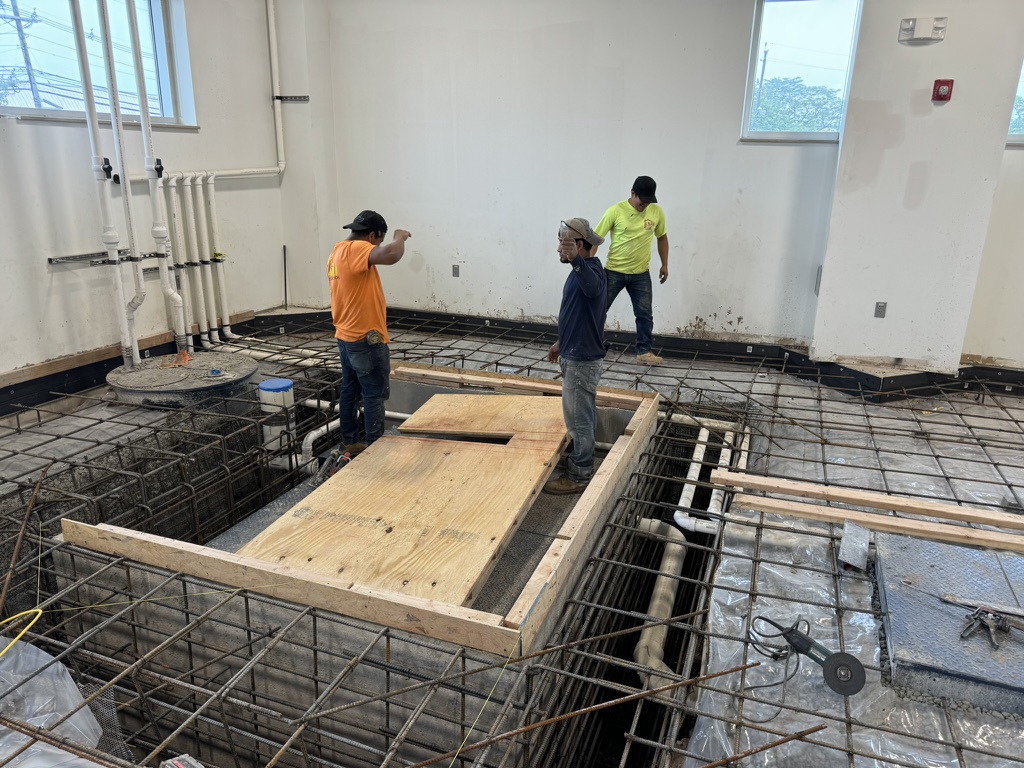
In most cases, this means opening the slab around the inside perimeter, installing a drainage channel or perforated piping alongside the footing, and directing collected water to a sump basin. From there, a sump pump discharges it safely outside. When installed correctly, these systems address cove joint seepage and sub-slab pressure very effectively. They are especially useful in homes where spring thaw causes recurring perimeter seepage rather than isolated wall cracks alone.
The quality of the pump setup matters more than many homeowners realize. A bargain pump in an undersized basin with no battery backup is not much protection during a spring storm outage. In New Jersey, where thaw season storms can bring both saturation and power interruptions, backup protection is not a luxury. It is part of a serious waterproofing strategy. A good system should include a reliable primary pump, an alarm, a backup power option, and a discharge line protected against freezing or obstruction.
Interior systems also need thoughtful finishing details. If basement walls show moisture, a vapor management approach may be needed so that water does not become trapped behind finished materials. Contractors who waterproof and then immediately close walls with moisture-sensitive materials without accounting for vapor movement create future mold problems even if liquid water is controlled.
Crack repair, wall stabilization, and the structural side of the conversation
Not all leaks are just drainage issues. Some point to movement in the foundation itself. A narrow vertical crack in poured concrete often responds well to professional injection with polyurethane or epoxy, depending on whether flexibility or structural bonding is the priority. But if that crack is growing, offset, or accompanied by bowing, the conversation shifts.
Spring thaw makes structural defects more obvious because pressure increases when soils are wet and heavy. Bowed walls, sheared mortar joints, and repeated cracking need evaluation beyond waterproofing alone. Wall anchors, carbon fiber reinforcement, steel beams, or partial rebuilding may be necessary in serious cases. This is where judgment matters. Selling a homeowner an expensive drainage system without addressing an actively failing wall is irresponsible. Selling structural reinforcement when the issue is simply isolated seepage is just as bad in the other direction.
Older New Jersey homes deserve special care here. Stone and brick foundations behave differently than modern poured concrete. They may allow some vapor transfer as part of their normal performance, and they often require breathable repair materials rather than hard modern coatings that trap moisture and accelerate deterioration. Anyone handling Basement Waterproofing NJ work on historic or semi-historic foundations needs to understand that difference.
Finished basements raise the stakes
A damp unfinished basement is frustrating. A damp finished basement is expensive. Flooring, drywall, trim, insulation, furniture, and electrical components all increase the cost of even a minor water event. Spring thaw intrusion that seems manageable in a utility basement can become a major insurance headache once the space has been converted into a family room, office, or guest suite.
That is why waterproofing should come before finishing, not after. If a basement has any history of seasonal dampness, the right time to address it is before new walls and flooring go in. I have walked into too many recently finished basements where beautiful materials were installed over active moisture conditions because everything happened to be dry during the remodeling window. One wet March later, baseboards are swelling and the owner is paying twice.
Materials also matter. Even with excellent waterproofing, basements are still below-grade environments. Moisture-tolerant assemblies outperform standard above-grade finishes. Rigid foam, closed-cell products in the right applications, composite trim, tile, and thoughtful air circulation can make a basement far more resilient than paper-faced drywall tight to cold walls and plush carpet over thin padding.
Choosing the right contractor in a market full of big promises
Waterproofing attracts aggressive sales tactics because the problem feels urgent and technical. Homeowners are vulnerable when they see water, and some companies lean hard on that fear. The better contractors do not start with a package. They start with diagnosis.
A useful estimate should explain where the water is believed to be entering, why the recommended method fits that condition, and what limitations remain. If a contractor skips exterior factors entirely and heads straight for the highest-ticket interior system, be cautious. If another contractor promises that a paint-on coating alone will solve active hydrostatic seepage, be cautious there too.
A few practical questions can reveal a lot:
- What evidence suggests the source is surface runoff, groundwater pressure, or both?
- How will the discharge be handled, and where will the water go?
- What happens if the power fails during a storm?
- Will the proposed repair address structural concerns if they are present?
- How will the system affect a finished basement or future remodeling plans?
The answers do not need to sound polished. They do need to sound specific. Generalities are cheap. Details show experience.
What homeowners can do before the next thaw
A homeowner cannot install a full drainage system over the weekend, but there are practical steps that reduce risk and improve the quality of any later inspection. Clean gutters, extend downspouts, clear window wells, and check whether soil around the house has settled into low spots. During the next heavy rain or warmup, walk the exterior carefully and note where water stands, where it flows toward the foundation, and whether downspouts are overflowing.
Inside, look for patterns rather than isolated symptoms. Use painter’s tape to mark damp spots, take photos with dates, and note the weather conditions. That simple record often helps separate condensation from intrusion and helps a contractor pinpoint the cause faster. If the basement is finished, pull stored items away from walls until the issue is resolved. A six-inch gap can save a lot of belongings from wicking moisture.
One warning deserves emphasis. If water is entering near electrical outlets, panels, or appliances, safety comes first. Do not step into standing water until power to the affected area is safely addressed.
The real goal is control, not wishful thinking
No below-grade space can be treated casually in a climate like New Jersey’s. Spring thaw will test drainage, grading, pumps, wall integrity, and every shortcut taken in previous years. The homes that stay dry are not necessarily the newest or the most expensive. They are the ones where water has been managed deliberately.
Good waterproofing work does not always look dramatic when it is finished. Often the biggest change is that nothing happens during the next thaw. No smell, no damp corner, no panic after a storm. That quiet outcome is what matters. Whether the answer is better exterior drainage, a sump-backed interior system, crack injection, structural reinforcement, or a combination of methods, the value comes from matching the repair to the physics of the problem.
For homeowners dealing with repeated spring leaks, that is the standard worth aiming for. Not a patch that buys a season, not a sales pitch built around fear, but a Basement Waterproofing NJ solution grounded in the way water actually moves through New Jersey soil, around real foundations, and into basements that have been asking for attention for years.
ARD Waterproofing
Address: 98 Smull Ave, West Caldwell, NJ 07006
Phone number: +12016465936
FAQ About Basement Waterproofing NJ
What is the best waterproofing method for a basement?
The best overall approach to waterproofing a basement is a combined exterior and interior system that stops water at the foundation wall and safely manages any moisture that gets through.
What is the average cost to waterproof a basement?
The average cost to waterproof a basement ranges from $2,500 to $15,000, with most homeowners paying around $5,200 for a complete project.
Can a basement be waterproofed from the inside?
Yes, a basement can be waterproofed from the inside, and it is often the most affordable and least disruptive method.
Ends · HOLDENPUTT243